🔥 Latest Updates
🎉 My first-author paper, Diffusion-Inversion-Net (DIN): An End-to-End Direct Probabilistic Framework for Characterizing Hydraulic Conductivities and Quantifying Uncertainty, has been accepted by Journal of Hydrology!
🎉 Our collaborative paper, Field characteristics and initiation mechanisms of debris floods: Insights from western Beijing, China, with Bo Zhang from Tongji University and Germany's Helmholtz Centre for Geosciences, has been accepted by Geomorphology!
I was awarded a Cornell Fellowship by the Field of Civil and Environmental Engineering at Cornell University!
I co-developed PIS with my collaborator Weijie Yang for broad physical parameter estimation. This work proposes a unified perspective for PDE-constrained parameter estimation problems: an end-to-end solver based on flow matching. [View Paper]
I developed Diffusion-Inversion-Net (DIN): An End-to-End Direct Probabilistic Framework for Characterizing Hydraulic Conductivities and Quantifying Uncertainty.
Open source code: XunZhangSean/Diffusion-Inversion-Net.
👇 Read the story behind this research (Research Note)
This is an idea I initially conceived two years ago when I was first introduced to data assimilation and generative models. This study leverages the iterative denoising advantage and probabilistic generation characteristics of diffusion models to build an end-to-end inversion solver for the fine-scale characterization of groundwater contamination sites. There are still imperfections in the paper that need to be addressed in the future.
I sincerely thank my collaborator, Weijie Yang from UCB, for completing this "dream work" with me, and I also extend my gratitude to Prof. Jiang and Prof. Zhang for their guidance.
A personal reflection: I actually felt a "small disappointment" after finishing this. The findings differed from my intuition two years ago. I initially hoped that the Diffusion model could theoretically prove its equivalence with Data Assimilation. However, while the iterative update in the Kalman Filter and the conditional iterative denoising in Diffusion models are intuitively similar (both embodying the idea of Bayesian correction), there seems to be no direct mathematical link. The Kalman Filter corrects predictions via new observations; Diffusion models correct sampling trajectories via predicted noise. Although I couldn't bridge this gap, I hope future theorists might connect them—that would be fascinating!
Our collaborative paper on remote sensing data and carbon sources/sinks, Quantitative estimation of vegetation carbon source/sink and its response to climate variability and anthropogenic activities in Dongting Lake Wetland, China, was published in Remote Sensing.
🎉🎉 Our paper Integration of DDPM and ILUES for Simultaneous Identification of Contaminant Source Parameters and Non-Gaussian Channelized Hydraulic Conductivity Field was published in Water Resources Research.
🎉🎉 I participated in the International Forum on Groundwater, presented a report and received the Outstanding Graduate Student Presentation Award!
I participated in Tongji University Environmental Science & Engineering Summer School 2024.
I participated in SJTU SDG July Camp - Ocean Sustainability in a Changing Climate.
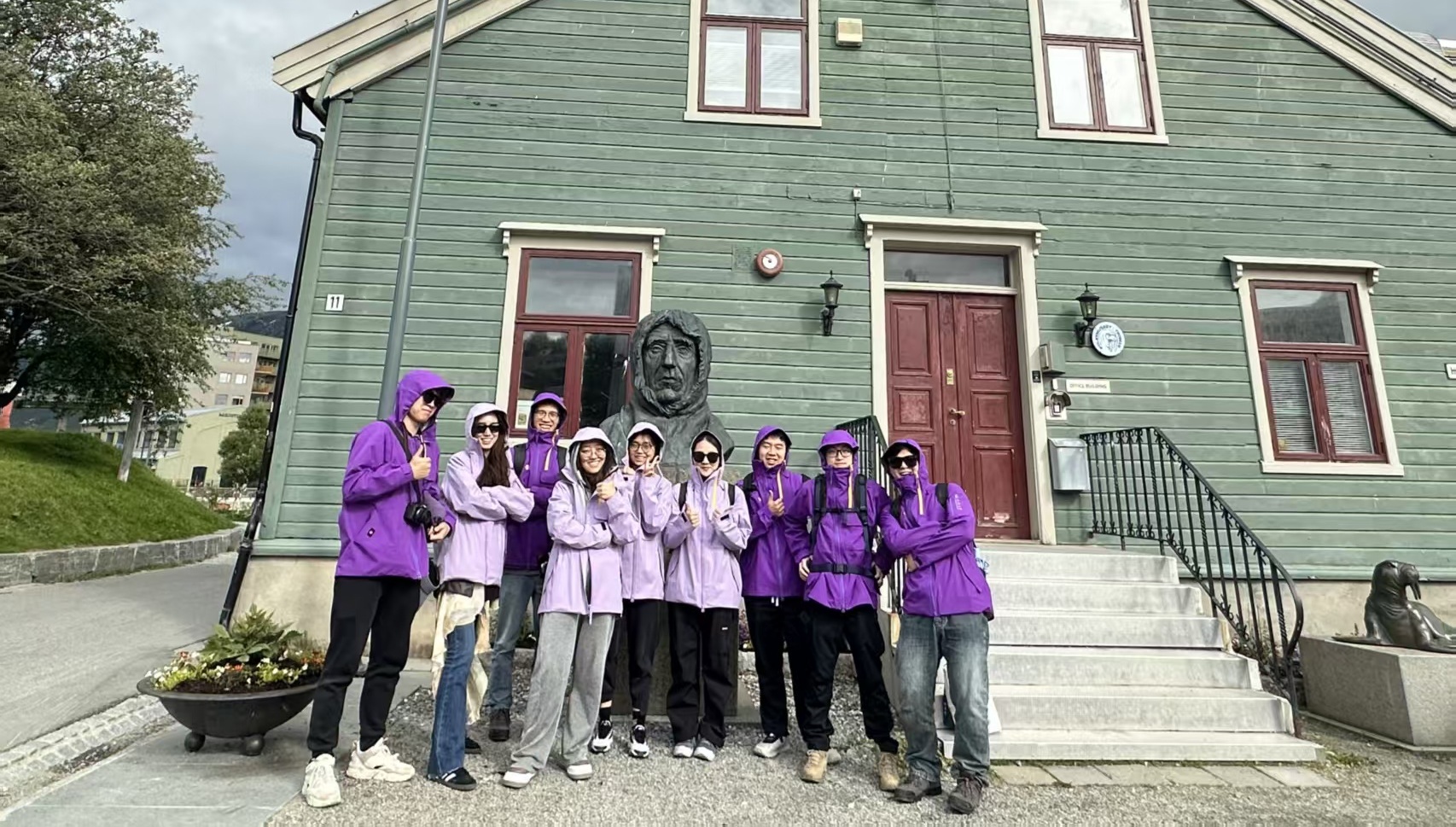
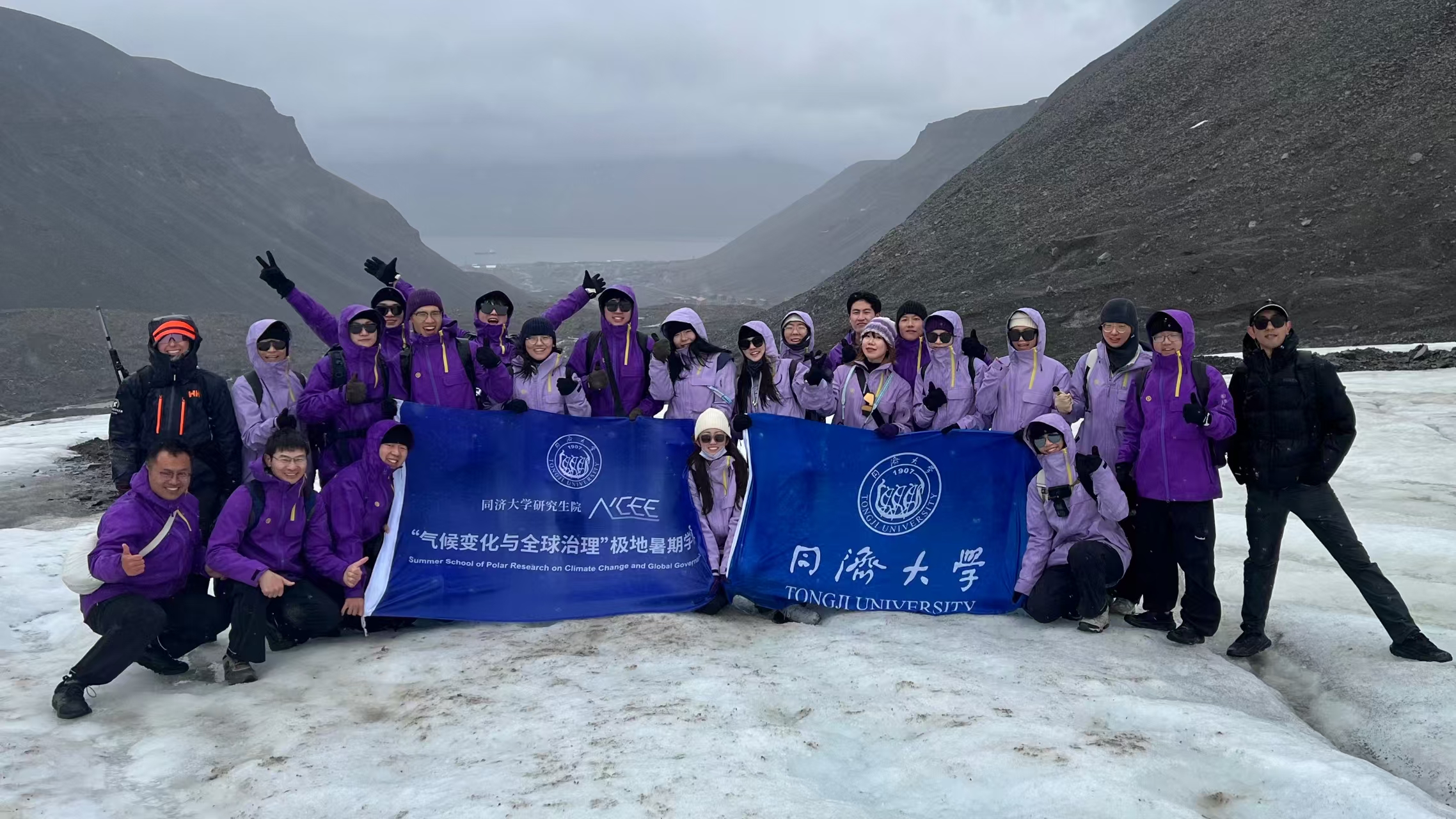
I participated in the Tongji University Summer School program "Climate Change and Global Governance - Exploring Norway and the Arctic," where I visited Svalbard island, Arctic! And I made many valuable friends and learned a lot of new knowledge about hydrology and the environment. Super joyful experience! Grateful for everyone I've met.😊
🎉🎉 Our paper Non-Gaussian Hydraulic Conductivity and Potential Contaminant Source Identification: A Comparison of Two Advanced DLPM-based Inversion Framework was published in Journal of Hydrology.
I participated in the Zhejiang University SDG Global Summer School, where I learned about carbon neutrality and met new friends and researchers!