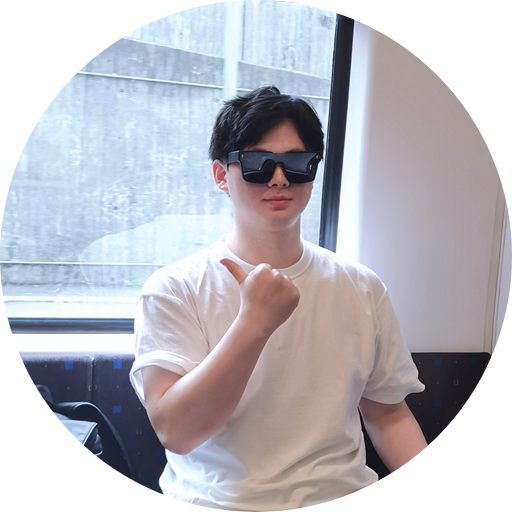
About Me
Hello there! I am Xun (Sean) Zhang, a first-year Ph.D. student in the School of Civil and Environmental Engineering at Cornell University. I work with Prof. Stefano Galelli in the Critical Infrastructure Systems Lab.
Before joining Cornell, I received my master's degree from the Department of Geological and Hydraulic Engineering, College of Civil Engineering at Tongji University in June 2025. After graduation, I continued to work in the same department as a Research Assistant for one year. I earned my bachelor's degree in Hydraulic and Hydropower Engineering from the College of Water Resources and Architectural Engineering at Northwest A&F University. My academic training has shaped a broad interest in hydrogeology, hydrology, computational modeling, and data-driven methods.
I am currently participating in the DARE project, which is developing a global time-series dataset of river systems under human influence from 1950 onward.
I look forward to continuing my research at Cornell and welcome discussions, collaborations, and research opportunities.
Current Research Interest
My current research interests focus on assessing how human interventions shape river systems. I am also interested in exploring innovative AI approaches to better represent human activities and characterize their impacts on rivers.
Representative directions I have explored
Methods explored
Inverse problems and inference: data assimilation; parameter estimation; uncertainty quantification; interpolation and reconstruction; causal inference; and geostatistics.
Generative and efficient modelling: generative models including DDPM, VAE, GAN, and flow matching; surrogate modelling; reduced-order modelling; and operator learning.
Scientific machine learning: physics-informed learning; transfer learning; reinforcement learning; graph learning; federated machine learning; and interpretable machine learning using SHAP and Grad-CAM.
Forecasting and process modelling: time-series forecasting with ARIMA, XGBoost/LightGBM, and GRU/LSTM/Transformer; upscaling methods for geologic models; and coupled surface water-groundwater modelling.
Application areas
Groundwater modelling: groundwater contamination source identification; high-resolution characterization of hydraulic conductivity fields; groundwater well placement optimization; groundwater level prediction; and inversion of groundwater storage from satellite gravimetry.
Hydrology and environmental modelling: urban flooding; debris floods; computational fluid dynamics; atmospheric pollution modelling; and Arctic sea ice.
Remote sensing and image analysis: image-based sediment detection and remote sensing for lake carbon sources and sinks.
Other physical and engineering systems: seismic waveform inversion; structural health monitoring; inverse design of materials; and battery state estimation.
Academic Service
Journal reviewer
Reviewer for Hydrogeology Journal, Journal of Hydrology, and Water Resources Research.
News (latest)
All News🎉 My first-author paper, Diffusion-Inversion-Net (DIN): An End-to-End Direct Probabilistic Framework for Characterizing Hydraulic Conductivities and Quantifying Uncertainty, has been accepted by Journal of Hydrology!
🎉 Our collaborative paper, Field characteristics and initiation mechanisms of debris floods: Insights from western Beijing, China, with Bo Zhang from Tongji University and Germany's Helmholtz Centre for Geosciences, has been accepted by Geomorphology!
I was awarded a Cornell Fellowship by the Field of Civil and Environmental Engineering at Cornell University!
Last updated: October 28, 2026